

How to Build a Personal Brand That Generates Income

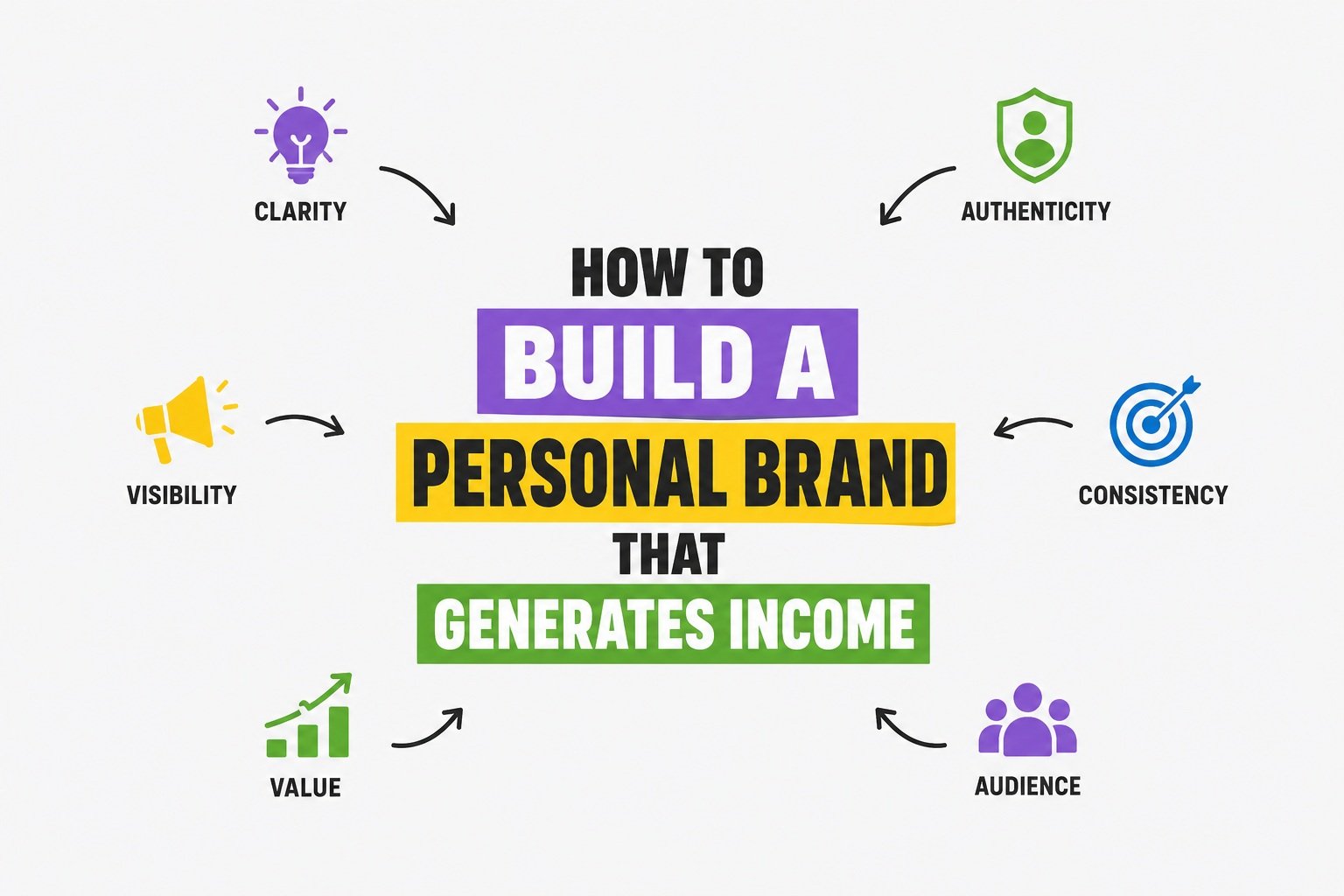
A couple of years ago, I came across two freelancers on LinkedIn who both offered content writing services. They had comparable skills, similar experience levels, and nearly identical portfolios.
One had 340 followers, posted occasionally, and competed for projects through proposals and marketplace bids. The other had 12,000 followers, posted three times a week about writing, content strategy, and online earning, and received two or three inbound enquiries every month from people who’d found her content useful and wanted to hire her.
Same skill. Very different businesses.
The difference wasn’t the quality of their writing; it was that one of them had built a personal brand and the other hadn’t. One was a freelancer whom clients hired when they found her. The other was someone clients sought out before they were even sure they needed to hire.
That gap between being discoverable and being sought is what a personal brand actually creates. And building one is far more accessible than most people imagine, especially if you’re already in the online earning or freelancing space.
What a Personal Brand Actually Is (Without the Marketing Jargon)
A personal brand is simply the specific impression people form about you based on what you consistently put into the world. It’s not a logo or a colour palette, though those are components. It’s the answer to the question: when your name comes up, what do people think of?
For a freelancer, a strong personal brand means people think “reliable content writer who specialises in online business topics” rather than “someone who does writing.” For a digital product creator, it means people think “the person who makes genuinely useful Notion templates for freelancers” rather than “a template seller.”
The specificity is what generates income. A brand that’s associated with a particular expertise, for a particular audience, creates the kind of targeted recognition that leads to direct enquiries, referrals, collaboration offers, and conversions on affiliate links or product sales.
A generic, professional presence but undistinctive produces none of these things, regardless of how much time you spend online.
How a Personal Brand Generates Income
The income-generating mechanism of a personal brand isn’t complicated, but it’s worth understanding clearly because most people think about personal branding as a marketing exercise rather than a business foundation.
When you consistently publish content that demonstrates expertise in a specific area, two things happen over time.
First, people who need what you do start finding you through search, social algorithms, or peer recommendations. They arrive already aware of your work before the first commercial interaction. This is called inbound discovery, and it fundamentally changes the conversion dynamic. Someone who’s read five of your articles doesn’t need to be convinced you know what you’re talking about.
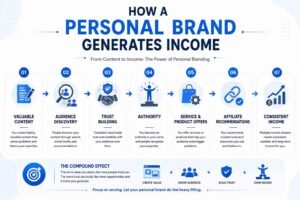
Second, your content builds a compound body of evidence of your expertise. Unlike a portfolio that shows finished work, a personal brand shows thinking, process, values, and perspective, the things that help a potential client, student, or reader decide whether you’re someone they want to invest in. This compound evidence is what makes personal brands durable. It doesn’t disappear when a platform changes its algorithm, because it exists across your content, your reputation, and other people’s memories of your work.
The income then flows through whatever channels you’ve connected to that brand: freelance enquiries, affiliate commissions, digital product sales, sponsored content, consulting, or speaking. The brand doesn’t generate income directly; it generates trust and discovery, which then convert through your chosen income paths.
Step-by-Step: How to Build a Personal Brand That Actually Generates Income
Step 1 — Get Specific Before Getting Visible
The most common personal branding mistake is trying to build visibility before having genuine clarity about what you stand for, who it’s for, and what makes your perspective worth following.
Spend real time answering these three questions before creating any content:
What specific topic or intersection of topics do I understand well enough to teach, explain, or demonstrate consistently? Not “online earning” (too broad) but “building passive income through affiliate marketing and digital products for Pakistani beginners.” Not “freelancing” (too broad) but “landing freelance writing clients without relying on Upwork.”
Who specifically benefits most from what I know? Fresh graduates, students with side income goals, salaried employees building their first freelance clients, small business owners who need affordable digital marketing help?
What perspective or approach makes my take different from the ten other people covering this topic? This isn’t about being contrarian for its own sake; it’s about honestly assessing what genuine angle you bring. It might be regional context (Pakistan-specific guidance), personal experience (the specific mistakes you’ve made and recovered from), or professional background (I spent three years in corporate marketing, so I approach freelancing with that perspective).
These three answers become the foundation of every content decision that follows.
Step 2 — Choose One Primary Platform and Do It Well
Trying to build a personal brand simultaneously across five platforms produces a thin presence everywhere instead of a meaningful presence anywhere.
Choose one platform that fits both your content style and where your target audience actually spends time.
LinkedIn for professional service freelancers, writers, marketers, designers, developers, consultants. Your audience (small business owners, marketing managers, startup founders) is there and actively consuming professional content.
Instagram or TikTok for visual, short-form content, social media freelancers, Canva creators, productivity-tool demonstrators, online earning educators targeting younger audiences.
YouTube for tutorial and long-form content,t anyone teaching a skill or process that benefits from demonstration, including tech tools, freelancing workflows, and digital product creation.
A blog for SEO-driven, evergreen content is the longest path to visibility, but the most durable and the most AdSense and affiliate-friendly of all platforms.
Start with one. Once it’s generating real results and requires only maintenance rather than heavy daily attention, expand to a second.
Step 3 — Publish Content That Demonstrates Expertise, Not Just Interest
There’s a meaningful difference between content that says “I find this topic interesting” and content that says “I understand this topic well enough to help you.” Personal brands that generate income are built on the second category.
Content that demonstrates expertise is specific, actionable, and honest about complexity and limitations. “5 things that improved my freelance client relationships” is demonstrably more expert than “why client relationships matter.” “My first three months on Upwork: what worked and what didn’t, with specific numbers” is more credible and expert than “Upwork tips for beginners.”
The specificity and honesty that feel risky admitting what didn’t work, naming exact numbers, acknowledging the limits of your experience are precisely what signal genuine expertise. Anyone can publish generally positive guidance. Only someone with real experience can be honest and specific.
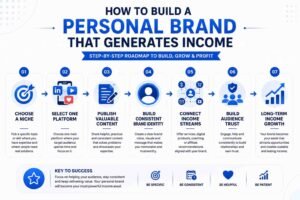
Step 4 — Develop a Consistent Visual and Tonal Identity
This doesn’t require hiring a designer or spending money on brand assets. It requires consistency in choosing a limited visual palette and sticking to it, developing a recognisable writing voice and maintaining it, and creating content that feels distinctly yours rather than generically professional.
Practically: choose two accent colours, one font family, and one content format style in Canva. Use these for every piece of content you publish. Over time, readers begin recognising your content before they even read the caption.
For written content: develop awareness of your natural voice, the words you reach for instinctively, the rhythm of how you explain things, whether you’re naturally warm, direct, or self-deprecating. Write toward that voice rather than away from it. Generic professional language is invisible. Specific personal voice is memorable.
Step 5 — Connect Your Brand to Income Paths Explicitly
A personal brand without deliberate income connections is an audience-building exercise. Useful, but incomplete.
Map your content to specific income mechanisms and make those connections visible to your audience:
Affiliate marketing: Every tool, platform, or resource you reference in your content can be linked through an affiliate programme. Your brand establishes the trust; the affiliate link provides the action step. Mention your affiliate relationships transparently.
Digital products: Your most-requested content or most-asked questions are usually your best product ideas. A brand that consistently gets asked “how did you set up your freelance workflow?” has a potential course, template, or guide audience already waiting.
Freelance services: A portfolio of consistent, expert content is itself a demonstration of what you can do for clients. Your LinkedIn posts about content strategy are proof of content strategy capability. Make it easy for potential clients to move from following your content to enquiring about your services with a clear bio link and an accessible contact method.
Sponsored content and partnerships: Brands in your niche will approach creators with established, engaged audiences in their target market. The smaller and more targeted your audience, the more relevant it is to specific brands, meaning micro-influencer partnerships are genuinely accessible without requiring hundreds of thousands of followers.
Step 6 — Be Patient With the Compounding Phase
Personal brandsare builtd through compounding each piece of content, adding to the body of evidence, each new follower potentially bringing others, each referral stemming from someone who discovered your content months ago.
The timeline this compounding operates on is typically six months to two years before a personal brand reliably generates substantial inbound income. There’s no shortcut to this. The only variable you control is the quality and consistency of what you put out during this period.
The creators who arrive at a strong, income-generating personal brand are rarely the ones who built it fastest. They’re the ones who kept publishing through the phase when nobody was paying attention yet.
Real Examples: Personal Brands That Generate Real Income
The LinkedIn freelance writer: A Pakistani content writer posts three times a week about content strategy, client communication, and the specific mechanics of freelance writing. After eight months, she has 4,200 LinkedIn followers, not a large number by any measure. But they’re highly targeted: marketers, startup founders, and small business owners who need content. She receives one to two inbound enquiries per month from people who’ve been following her posts, bypassing the proposal-writing competition entirely. Her income per hour is significantly higher than it was when she relied on marketplace platforms.
The digital product creator with a niche newsletter: A developer who specialises in productivity tools for remote teams writes a weekly newsletter about workflow optimisation. After fourteen months, the newsletter has 2,100 subscribers again, not a viral number, but an extremely targeted one. He sells Notion templates specifically designed for remote software teams. His conversion rate from newsletter to product sales is 4–6%, generating consistent monthly income from a list he owns regardless of any platform’s algorithm.
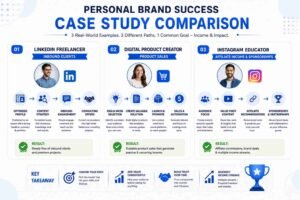
The Instagram educator: A social media freelancer posts Canva tutorials and client communication tips for Pakistani small business owners. Her account grows to 6,800 followers over a year of consistent posting. She earns through a Canva affiliate link in her bio, a template pack sold through Gumroad, and occasional sponsored posts from relevant local businesses. No income stream is large individually; combined, they represent a meaningful monthly supplement to her freelance retainer income.
Common Mistakes in Personal Brand Building
Trying to appeal to everyone. A brand that’s for everyone is for no one specifically, and “no one specifically” is almost impossible to market to, refer to, or remember. The narrower your defined audience, the clearer your content direction and the higher your relevance to the people it’s actually for.
Prioritising aesthetics over substance. A beautiful visual identity with content that doesn’t demonstrate genuine expertise produces a brand that looks professional but doesn’t build trust. The content is the brand. The visuals just make it more recognisable.
Inconsistency in posting. Two weeks of daily posting followed by three weeks of silence resets the algorithmic momentum you’ve built and signals an unreliable presence to potential followers. A sustainable posting rhythm three times a week, or even weekly, maintained consistently beats bursts of volume followed by silence.
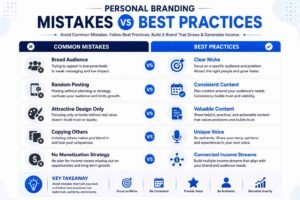
Copying the content style of successful creators in your niche. Being obviously derivative of a more established voice in your space makes you permanently a smaller version of them. The path to a distinctive personal brand is finding what’s genuinely different about your perspective and leaning into that, not replicating someone else’s format.
Not linking content to income. A personal brand that generates no calls to action, no affiliate links, no product mention, no service page, and no easy contact method is leaving its income potential completely untapped. The audience you build needs somewhere to go.
Helpful Tips
Repurpose one piece of content across multiple formats. A blog article becomes a LinkedIn post series. A LinkedIn post series becomes a newsletter edition. A newsletter edition becomes a TikTok script. This isn’t lazy; it’s efficient, and different audiences encounter the same idea through different formats.
Respond to every comment in the early stages. When your audience is small, every interaction is disproportionately visible and valuable. A creator who replies thoughtfully to every comment signals accessibility and genuine engagement that builds the kind of loyal early community most large accounts wish they’d cultivated more deliberately.
Save the questions people ask you. In comments, in DMs, in emails, every question someone asks you about your topic is either content you haven’t made yet, a product you haven’t created yet, or a service you haven’t articulated yet. Keep a running list.
Be consistent about what you don’t talk about. A defined personal brand knows what it is and what it isn’t. Staying out of certain topics even when those topics are trending reinforces your niche identity as much as what you choose to cover.
FAQs
Do I need a professional logo and website to start building a personal brand? No. A clear bio, a consistent voice, and quality content on a single platform are enough to start. Invest in design assets after you’ve validated your niche and content direction. Building an elaborate brand identity before you know exactly what you’re building it around is putting the cart ahead of the horse.
Can I build a personal brand while keeping my identity private? Partially. Using a pen name or brand name rather than your personal name is viable for most content formats. However, some income paths, particularly freelance services and high-ticket consulting, convert better when there’s a real, identifiable person behind the brand. For product sales and affiliate marketing, a consistent brand persona without full personal disclosure can work effectively.
How long does it take to start generating income from a personal brand? For affiliate links in content that’s already getting organic traffic, sometimes for weeks. For consistent inbound freelance enquiries, typically six months to a year of consistent brand building. Product sales depend on audience size and product-market fit, but usually occur three to nine months after a reasonably active start.
Is personal branding worth the effort for a beginner freelancer? Yes, and the earlier you start, the less effort is required later. A personal brand built alongside your first year of freelancing means you’re not starting from scratch when you eventually want inbound clients. The compounding happens whether you’re paying attention to it or not, but only if you’re actually creating content.
The Honest Long View
Personal brands that generate real income aren’t built in a month, and they’re rarely built through a single viral moment. They’re built through the accumulated weight of consistent, honest, specific content published over a long enough period that the right people find it and trust it.
The creators who most visibly appear to have “built their brand quickly” almost always have a longer background story, years of private learning, earlier platforms they built and abandoned, and professional experience that preceded their public presence. The speed you see is usually the final compounding phase, not the entire journey.
What makes a personal brand genuinely income-generating isn’t size. It’s the alignment between what you consistently say, who you consistently say it for, and what you consistently make available for them to buy. Get that alignment right, publish consistently, and wait long enough, and the income follows.
Disclaimer: This article is for educational and informational purposes only. Results from personal brand building vary significantly based on niche, consistency, content quality, and individual effort. Nothing in this article constitutes a guarantee of income or professional outcomes.