

How to Make Passive Income Selling Digital Products in 2026

The first digital product I ever sold was a two-page PDF.
It wasn’t a masterpiece. It was a checklist I’d made for myself, a step-by-step process I used every time I set up a new client project as a freelancer. Somewhere around the fourth or fifth time I explained this process to someone else for free, I thought: what if I just wrote this down, formatted it properly, and sold it?
I spent a Sunday afternoon turning my notes into a clean, readable PDF using Canva. Listed it on Gumroad for $7. Shared it in one relevant Facebook group with a brief description. Went to sleep.
Woke up to three sales.
Not a fortune. Twenty-one dollars. But those twenty-one dollars came in while I was asleep, from people I’d never met, for something I made once and never had to recreate. That was the moment passive income selling digital products stopped feeling like a concept and started feeling like a real thing I could actually build.
This guide is everything I’ve learned since then, what works, what doesn’t, and how to get from your first idea to your first sale without overcomplicating the whole thing.
What Selling Digital Products Actually Means
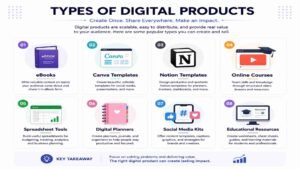
A digital product is anything valuable that can be delivered electronically, downloaded, accessed, or used without a physical object changing hands. No manufacturing, no shipping, no inventory. You make it once; it can be sold thousands of times.
The range of what counts as a digital product is wider than most people initially think:
Documents and templates: eBooks, guides, checklists, planners, spreadsheet templates, presentation templates, CV templates, business proposal templates.
Design assets: Canva templates, social media kits, logo packs, font bundles, icon sets, Lightroom presets, and Photoshop brushes.
Educational content: Online courses, video tutorials, workshops, webinars, mini-courses.
Software and tools: WordPress plugins, Notion templates, Excel macros, mobile app filters, browser extensions.
Audio and music: Podcast intro music, background tracks, sound effects, recorded meditations, audiobooks.
What all of these have in common is that the cost to reproduce them is essentially zero. Creating the original takes time and effort. But the thousandth copy costs exactly as much as the first, nothing, which is what makes digital products one of the cleanest models for passive income that actually exists.
How the Passive Income Part Works — The Real Mechanism
Here’s the thing about the word “passive”: it describes the income, not the creation.
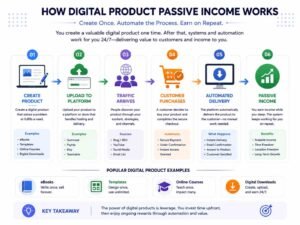
Making the product is active work. It might take an afternoon, a week, or two months, depending on what you’re building. The passive part kicks in after the product exists: a platform handles discovery, purchase processing, and file delivery automatically. You don’t need to be awake, online, or involved.
The model has three moving parts:
The product: Something genuinely useful that a specific group of people would pay for.
The platform: Where people discover it, pay for it, and receive it. This can be Gumroad, Payhip, Etsy (for digital downloads), Teachable, Podia, or your own website. The platform handles transactions and delivery automatically.
The traffic source: How people learn about the product. This is the part most beginners underestimate. A product listed with no promotion gets no sales, no matter how good it is. Traffic can come from search engines (SEO), social media, email lists, Pinterest, or word of mouth.
Once all three are working, the “passive” part is where real sales happen when you’re not looking, from people who found you through your traffic source, bought automatically through your platform, and received their file without you touching anything.
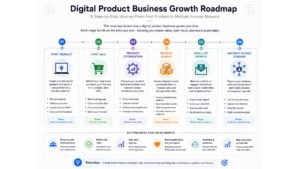
Step-by-Step: How to Start Selling Digital Products in 2026
Step 1 — Find the Right Idea (Start With What You Already Know)
The most common mistake beginners make is trying to invent a product idea from scratch. The better approach is to look at what you already know, skills, processes, systems, and knowledge, and identify the part of it that other people consistently struggle with or ask you about.
Ask yourself:
What do people come to me for help with? What did I figure out the hard way that I could teach someone else more easily? What process do I use repeatedly that I’ve never seen documented clearly elsewhere? What template, checklist, or system do I use personally that others might pay to have ready-made?
You don’t need to be the world’s leading expert. You need to know more than the person you’re selling to, which, for a beginner-targeted product, often means understanding something well enough to explain it clearly.
The sweet spot for a first digital product is something you can make in one to two weeks, that solves a specific, recognisable problem, and that you already have the knowledge to create without extensive research.
Step 2 — Validate Before You Build
Spending four weeks building a product and then discovering nobody wants it is the most avoidable mistake in this space.
Validation doesn’t need to be elaborate. Post in a relevant Facebook Group or community: “I’m thinking about creating product description. Would this be useful to you? Would you pay for it?” If five or more people say yes or engage genuinely, you have early validation. If nobody responds or the responses are lukewarm, adjust the idea.
Even better: pre-sell it. Write a brief description and set up a Gumroad page before the product exists. Share it and see if anyone buys. If people pay for something before it’s finished, you have definitive proof of demand. This sounds counterintuitive, but it’s a widely used approach among experienced digital product creators.
Step 3 — Create the Product With the Right Tools
You don’t need expensive software to create most digital products.
For eBooks, guides, checklists, and planners, Canva (the free tier is sufficient) lets you design professional-looking documents. Google Docs for writing, exported to PDF, is perfectly acceptable for text-heavy products. Canva’s templates for workbooks and planners are particularly good.
For Notion templates: Build the template in your own Notion account, then duplicate it as a template link that buyers can copy to their own workspace. No design software required.
For spreadsheet templates: Google Sheets or Microsoft Excel. Both export cleanly and work on any device.
For social media template packs: Canva Pro is worth considering here, as it allows you to create template links that buyers can edit in their own free Canva accounts, which is a far better buyer experience than sending an editable file they might not know how to use.
For online courses and video tutorials, Loom (free for basic use) records both the screen and the camera simultaneously. OBS Studio is free and more powerful for longer recordings. You don’t need a studio,o decent lighting, a clear microphone (even a Rs. 2,000 plug-in mic makes a noticeable difference), and a clean background are enough to start.
Step 4 — Set Up Your Selling Platform
For most beginners, Gumroad is the easiest starting point. It’s free to use (Gumroad takes a small percentage per sale), has a built-in discovery marketplace, and handles payments, file delivery, and receipts automatically.
Gumroad: Best for first-time sellers. Easy to set up in under an hour. Works internationally, including Pakistan, via Payoneer for payouts.
Payhip: Similar to Gumroad, with a slightly different fee structure. Also works well for beginners.
Etsy: Strong for design assets, templates, and printables. Etsy’s marketplace has built-in search traffic that people browse Etsy specifically looking for digital downloads. The trade-off is that Etsy has listing fees and a more competitive marketplace.
Teachable or Podia: Better suited for courses and structured educational content. More setup involved, but better buyer experience for multi-lesson content.
Your own website with WooCommerce: Maximum control and no platform fees (beyond payment processing). Requires more technical setup. Best approached once you’ve validated your product sells, rather than as a starting point.
Create your product page with:
- A clear, specific title that describes exactly what the product is
- Three to five bullet points explaining what the buyer gets and how it helps them
- One or two preview images showing what the product looks like
- A clear price with any relevant context (“one-time purchase, instant download”)
- A short personal note about why you created it
Step 5 — Price It Correctly
Pricing a digital product is where many beginners either undervalue their work or overthink the strategy.
A useful framework: price it at what a single use of the product is worth to the buyer, not what it costs you to make. A CV template that helps someone get a job interview is worth more than the two hours it took you to design it. A budget planner that saves someone financial stress for a year is worth more than a few pages of design.
Common price ranges that work for beginners:
Simple templates, checklists, and short guides: $5–$15 Comprehensive template packs, detailed planners, or multi-resource bundles: $15–$35 Mini-courses, in-depth guides, or professional tools: $29–$79 Full courses with video content and structured learning: $49–$197
Don’t start at $2, trying to undercut everyone, it signals low quality and attracts buyers who are most likely to request refunds. Start at a reasonable price for the value you’re providing, and adjust based on what your early sales data tells you.
Step 6 — Build a Traffic Source That Works for Your Product Type
A product page with no visitors earns nothing. This is the part that separates digital product sellers who build passive income from those who make one sale and wonder why it stopped.
Pinterest: Exceptional for visual products, templates, planners, design assets, and printables. Create pins showing the product in use and link to your product page. Pinterest pins have long lifespans and continue driving traffic months after posting.
SEO (blog or website): Write articles related to your product topic. Someone reading an article about “how to organise your freelance workflow” is a natural potential buyer for a freelance project management template. Your article drives organic traffic; your product page converts a portion of it.
Facebook Groups: Participate genuinely in niche communities. Don’t spam links. Contribute real value, establish credibility, then mention your product where it’s genuinely relevant and where group rules permit.
Email list: Even a small, focused list converts better than large social media followings. Offer something free (a smaller version of your product, a related checklist) to build subscribers, then email them when you have something new for sale.
YouTube: Tutorial videos that teach part of what your product covers naturally lead to “I’ve made a complete template/guide/system if you want the full version” calls to action. This model works particularly well for Notion templates, spreadsheet tools, and educational content.
Real Examples: What Beginners Are Actually Selling in 2026
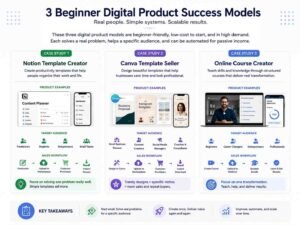
The Notion template seller: A university student in Karachi who uses Notion obsessively builds a Notion study planner specifically designed for Pakistani university exam schedules with a semester tracker, deadline management system, and grade calculator. She lists it on Gumroad for Rs. 500 ($2) and promotes it in three university Facebook groups. First week: 22 sales. She raises the price to Rs. 800 after validation. She now sells 30–40 copies per month without touching it.
The Canva template creator: A social media manager builds a set of 20 Canva Instagram templates designed specifically for Pakistani restaurants, with Urdu font pairings, food-focused layouts, and Ramadan special designs. She sells the pack on Etsy for $12. Etsy’s marketplace search drives consistent organic traffic. She earns $200–$350 monthly from this one pack, created in three days.
The online educator: A digital marketing professional creates a three-video mini-course on how to run Facebook Ads for small businesses in Pakistan, specifically covering ad account setup in the Pakistani market, budget recommendations in PKR, and local audience targeting. She sells it on Gumroad for Rs. 2,500. It addresses a problem that generic YouTube tutorials don’t cover well (Pakistani-specific setup). She drives traffic through LinkedIn posts and a Facebook Group she runs for Pakistani business owners.
Each of these examples shares the same pattern: a specific audience, a specific problem solved, and a targeted traffic channel that keeps bringing new buyers without the creator doing repetitive work.
Common Mistakes That Kill Digital Product Passive Income Before It Starts
Making the product for “everyone.” A budget planner for “anyone who wants to save money” competes with thousands of identical products. A budget planner specifically for Pakistani university students managing pocket money and side income is specific enough to find its audience and stand out in it.
Skipping the product preview. Buyers can’t touch, feel, or test a digital product before purchasing. Clear preview images and screenshots of what’s inside, mockups showing the product in use, are the closest thing to “trying before buying” in the digital space. Products without previews convert dramatically worse than products with them.
Treating the first version as the final version. Early buyer feedback is gold. Many successful digital product sellers release a version 1.0, collect feedback from early buyers, update the product, and re-promote a “version 2.0.” This update cycle generates repeat attention and improves the product’s conversion rate without requiring a completely new product.
Choosing a platform and never promoting. Gumroad has some organic discovery, Etsy has more, but neither will automatically surface your product to thousands of buyers without effort. You need an external traffic source driving people to your product page.
Underestimating how long it takes to build traffic. A new Etsy listing or Gumroad product typically takes one to three months to gain momentum through organic search. Pinterest content takes two to four months to compound meaningfully. This is normal. The mistake is expecting immediate results and abandoning the product before the traffic has had time to build.
Helpful Tips That Make a Real Difference
Bundle your products once you have two or three. A bundle priced at $29 when the individual products cost $12 each creates perceived value and increases average order value without you creating anything new.
Offer a free version to build your email list. A smaller, stripped-down version of your product given away free in exchange for an email address builds a list of people who have already demonstrated interest in exactly what you sell. This list becomes your most reliable traffic source over time.
Use mockup images, not just flat screenshots. A PDF guide shown as a flat screenshot is less compelling than the same guide shown as a clean mockup displayed on a tablet screen, or as a stack of pages with a cover visible. Free mockup tools like Smartmockups or Canva’s built-in mockup feature make this easy.
Answer your buyers’ questions publicly. When a buyer messages with a question, turn the answer into an FAQ on your product page or a social media post. These answers often address questions other potential buyers had but didn’t ask, and they improve your conversion rate.
Test different price points. After your first 20–30 sales, try raising your price by 30–50% and observe whether the conversion rate drops significantly. Many products convert equally well at higher prices because buyers associate price with quality in digital goods.
FAQs
Do I need design skills to create digital products? For many product types, no or at least not extensively. Canva’s templates remove most of the design skill barrier for document-based products. Notion templates require no design at all. For more visually demanding products like social media template packs or brand kits, basic Canva skills (learnable in a week) are sufficient.
How long until I start making consistent passive sales? Honest answer: one to four months after setting up your product and traffic source, depending on the platform and niche. Etsy has built-in search traffic that can produce results within weeks. Pinterest takes two to three months to compound. A blog-driven approach takes the longest but has the highest long-term ceiling.
Can I sell digital products from Pakistan? Yes. Gumroad and Payhip both support Payoneer as a payout method, which Pakistani sellers can use to receive USD earnings and convert them locally. Etsy also supports Payoneer. This is a functional, widely used payment path for Pakistani digital product sellers.
What if my product doesn’t sell? First, check whether the problem is traffic (nobody is seeing it) or conversion (people are seeing it but not buying). If traffic is low, work on promotion. If traffic is reasonable but conversion is poor, look at your product page preview images, description clarity, and price are the most common issues. Adjust one thing at a time so you can identify what actually made the difference.
Do I need to register a business to sell digital products? This varies by country. In Pakistan, individuals can sell digital products without formal business registration, though it’s worth understanding your tax obligations as income grows. Consult a local accountant once your income becomes regular. This is not an area to navigate based on generic online advice.
The Bigger Picture
Selling digital products for passive income is not an overnight transformation. The first product teaches you more than any guide can about what your specific audience responds to, which platforms drive traffic to your niche, how to write a product description that converts, and what price points feel right for your buyers.
The second product is faster to create and more likely to succeed because you’re not learning from zero anymore. The third faster still.
Most people who earn meaningful passive income from digital products aren’t doing it from one product. They’re doing it from five, eight, twelve, a catalogue built steadily over one to three years, each earning something modest on its own, collectively adding up to something that genuinely changes what financial flexibility looks like in their life.
That’s not a shortcut. But it is a real path, and it starts with one product, one platform, and one traffic source. The same unglamorous, specific beginning every successful digital product creator had.
Disclaimer: This article is for educational and informational purposes only. Results from selling digital products vary based on niche, product quality, marketing effort, and market demand. Nothing here constitutes a guarantee of income. Platform fees, policies, and features mentioned are accurate as of the time of writing and subject to change.