

Best Freelancing Skills to Learn in 2026

Two years ago, I was sitting in a coffee shop, refreshing my bank account for the third time that day, waiting for a client payment that was already five days late. I had a marketing degree, a laptop, and absolutely no idea what skill would actually pay my bills online.
Sound familiar?
If you’re reading this, you’re probably in one of two situations. Either you want to start freelancing and have no clue where to begin, or you’re already freelancing but feel like your current skill isn’t earning what it should.
I’ve been there. Both times, actually. And after three years of trial, error, and a few embarrassing client calls where I clearly didn’t know what I was talking about, I’ve figured out which skills genuinely work in 2026, not just the ones that look good on a “top skills” list someone wrote without ever sending an invoice.
Let’s get into it.
What “Freelancing Skills” Actually Means
When people say “freelancing skills,” they usually mean two different things, and mixing them up is why a lot of beginners waste months.
There’s the hard skill, the actual thing you do: writing, coding, designing, editing video, whatever.
Then there’s the freelancing skill: the ability to find clients, price your work, communicate professionally, and not fall apart when a client ghosts you after you’ve already delivered the project (yes, this happens more than anyone admits).
You genuinely need both. I know people who write beautifully but can’t land a single client because their pitch messages read like a school essay. I also know average writers making solid money because they know how to talk to clients and deliver on time, every time.
So when I list skills below, I’m talking about the technical ones, but keep in mind that half your success depends on how you present yourself, not just what you know.
How the Freelance Market Actually Works Right Now
Here’s something nobody tells beginners: the freelance market isn’t one big pool. It’s more like dozens of small ponds, with some overcrowded while others have barely anyone fishing in them.
AI tools have changed a lot in the last two years. Basic content writing, simple logo design, and generic data entry work have gotten a lot more competitive because, honestly, AI can do a rough version of these things now.
But here’s the twist: this hasn’t killed freelancing. It’s just shifted what clients are willing to pay for. Clients now pay well for people who can use AI tools and add real judgment, strategy, or a human touch on top. The skills that survive and thrive are the ones AI can assist with but not fully replace.
That’s the lens I used to build this list.
Step-by-Step: How to Pick the Right Skill for You
Before jumping into the list, figure out where you actually stand. I made the mistake early on of picking a skill because it looked profitable on YouTube thumbnails, not because it fit me.
Step 1: Look at what you already do without getting paid. Do you edit videos for fun? Write long captions for friends? Fix your relatives’ Excel sheets? That’s your starting hint.
Step 2: Check real demand, not hype. Search for the skill on Upwork or Fiverr and look at how many active job posts there are, not just how many gurus talk about it.
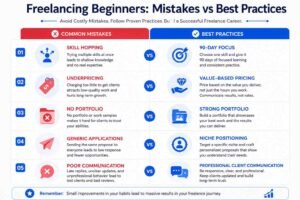
Step 3: Pick one skill and commit for 90 days. Skill-hopping is the #1 reason beginners never earn anything. I switched between three skills in my first six months and made basically zero dollars until I stopped and focused.
Step 4: Build one small portfolio piece before pitching clients. Even a fake project works. Clients want proof, not promises.
Now, the actual skills.
Best Freelancing Skills to Learn in 2026
1. AI-Assisted Content Writing
Plain content writing alone isn’t as valuable anymore, but writers who know how to use AI tools to draft faster, then add real research, personal voice, and SEO structure on top of that are getting hired constantly.
I switched my own writing process last year. I use AI for a first draft skeleton, then rewrite most of it, add real examples, and fix the tone. Clients notice the difference immediately, and honestly, so do readers.
Where to find work: Upwork, Contra, ProBlogger job board, direct outreach to small businesses.
2. Short-Form Video Editing
Every business wants Reels, TikToks, and YouTube Shorts now, but most business owners have zero time or skill to edit them.
A friend of mine learned the basics of CapCut and Premiere Pro editing over a weekend using free YouTube tutorials. Within two months, she was editing for three small brands and made more than her old part-time retail job.
Where to find work: Instagram DMs to small business pages, Fiverr, referrals from other freelancers.
3. Web Development (Especially No-Code + Light Code)
Full custom coding is still valuable, but there’s huge demand for people who can build fast using tools like Webflow, WordPress, or Framer, combined with basic HTML/CSS knowledge to customize things clients actually ask for.
Small businesses don’t want a complicated custom-built site. They want something clean, fast, and done in two weeks.
Where to find work: Upwork, local business Facebook groups, cold email to businesses with outdated websites.
4. Graphic Design With a Brand Strategy Angle
Plain logo design is oversaturated. But designers who understand branding colors, positioning, and consistency across platforms stand out immediately.
I hired a designer last year who didn’t just make a logo. She asked me about my audience, my competitors, and my long-term goals first. That one conversation made me trust her completely, and I paid her more than double what I initially planned to spend.
Where to find work: Dribbble, Behance (for showcasing), Upwork, direct client referrals.
5. Virtual Assistance (Specialized, Not Generic)
Generic VA work pays low. Specialized VA work, like e-commerce store management, email marketing setup, or podcast production assistance, pays significantly more.
Where to find work: Belay, Fancy Hands, Upwork, niche Facebook groups for entrepreneurs.
6. SEO and Keyword Research
Businesses always need visibility, and real SEO skill (not just stuffing keywords) is rare. If you understand search intent, on-page SEO, and basic technical SEO, you’re in a small, valuable pool of freelancers.
Where to find work: Upwork, direct outreach to blogs and small e-commerce stores, LinkedIn.
7. AI Tool Consulting for Small Businesses
This one surprised me. Small business owners are overwhelmed by AI tools and don’t know what to use or how. People who can simplify this set up a chatbot, automate emails, or streamline workflows using tools like Zapier or Make are getting hired fast.
Where to find work: LinkedIn outreach, local business networking events, referrals.
8. Voiceover and Audio Editing
Podcasts and YouTube videos need clean audio and sometimes voiceover talent. If you have a decent microphone and a good ear for editing out background noise, this is a low-competition niche most beginners overlook.
Where to find work: Fiverr, Voices.com, podcast production agencies.
Real Examples From People I Know
My cousin started freelance video editing with zero experience in early 2025. She now edits for two YouTube creators and makes more monthly than in her college-educated office job.
A former coworker taught himself basic Webflow design and now builds landing pages for small businesses, charging around 300 to 600 dollars per project, completing two to three a month alongside his day job.
I personally shifted from generic blog writing to a mix of SEO writing plus light content strategy, and my income roughly doubled once I stopped competing purely on price.
Common Mistakes Beginners Make
Chasing the “highest paying” skill instead of a fitting one. If you hate coding, forcing yourself to learn it because it “pays well” leads to burnout, not income.
Underpricing to get clients. I did this. It attracts clients who don’t respect your time and makes it harder to raise prices later.
Not showing proof of work. Clients can’t read your mind. A rough portfolio beats an impressive resume with zero samples.
Applying to everything instead of a niche. Being “a writer” is vague. Being “a writer for SaaS companies” gets noticed faster.
Ignoring communication skills. Late replies, unclear updates, and vague pricing conversations kill more freelance careers than lack of skill does.
Tips That Actually Helped Me
- Start with one platform, master how it works, then expand.
- Set a simple daily habit of learning for 30–45 minutes instead of binge-learning once a week.
- Always ask clients clarifying questions before starting work; it prevents painful revisions later.
- Save every piece of positive client feedback; it becomes portfolio gold.
- Don’t ignore free tools like Canva, CapCut, and Google Analytics while you’re starting. You don’t need expensive software on day one.
Frequently Asked Questions
Is freelancing still worth it in 2026 with so much AI around? Yes, but the type of work that pays well has shifted toward skills where human judgment, creativity, or strategy matters, not just execution.
How long does it take to start earning from freelancing? Realistically, most people see their first paid project within one to three months if they focus on one skill and pitch consistently.
Do I need certifications to freelance? Not usually. Clients care more about your portfolio and results than certificates, though certain fields like SEO or Google Ads do benefit from basic certifications for credibility.
Which platform is best for beginners? Upwork and Fiverr are solid starting points, but don’t ignore direct outreach through LinkedIn or Instagram; sometimes that gets faster results than crowded marketplaces.
Can I combine multiple skills? Definitely, and honestly, it’s becoming an advantage. Someone who can write and edit video or design and understand basic SEO tends to earn more than someone with just one narrow skill.
Before You Go
If there’s one thing I wish someone told me when I started, it’s this: the “best” skill isn’t the one everyone’s talking about online. It’s the one you’re willing to actually practice when no client is watching, and no money is coming in yet.
Pick something from this list that genuinely interests you, give it real focus for a few months, and don’t compare your week one to someone else’s year three.
That’s really the whole secret. Not glamorous, but it’s true.