

ClickBank Affiliate Marketing for Beginners (Step-by-Step Guide)


The first time I looked at ClickBank’s marketplace, two things happened simultaneously.
I was genuinely impressed by the commission rates of 40%, 50%, and sometimes 75% on digital products. That’s dramatically more than Amazon’s 1–10%. The second thing that happened was that I started reading the actual product listings’ headlines promising miraculous weight loss in two weeks. Systems guaranteed to make thousands of dollars with minimal effort. Supplements with dramatic “transformation” claims.
I almost closed the tab entirely.
What stopped me was realising that ClickBank is a platform, not a category. The low-quality products are genuinely there, but so are legitimate courses, software tools, educational programmes, and business resources with honest value propositions and real customer satisfaction. The difference between someone who builds a credible income with ClickBank and someone who burns their audience’s trust comes down almost entirely to product selection.
That’s the context this entire guide is built around: how ClickBank actually works, how to choose products you can recommend honestly, and how to build a real, sustainable income without promoting things you wouldn’t feel comfortable putting your name beside.
What is ClickBank? The Honest Version
ClickBank is a digital marketplace and affiliate network that connects product creators (vendors) with affiliate marketers. Vendors list their digital products,s courses, eBooks, software, and membership programmes on the platform. Affiliates browse the marketplace, choose products to promote, and earn a commission for every sale they generate.
Founded in 1998, it’s one of the oldest affiliate networks in the world. It has paid out billions of dollars in commissions and has millions of registered affiliates globally. It is, by any measure, a large and functional platform.
What makes ClickBank different from networks like Amazon Associates or ShareASale is the commission structure. Because ClickBank deals almost entirely in digital products (which cost nothing to reproduce), vendors can afford to pay affiliates much higher percentages, often 40–75% of the sale price.
The trade-off, which most beginner guides won’t tell you plainly, is that the quality of products on ClickBank varies enormously. The platform’s relatively low vendor registration barrier means that both excellent courses and questionable products exist in the same marketplace. Navigating this gap,p which comes down entirely to how carefully you evaluate products before promoting them, is the core skill ClickBank affiliates need to develop.
How ClickBank Affiliate Marketing Works
The mechanics are straightforward.
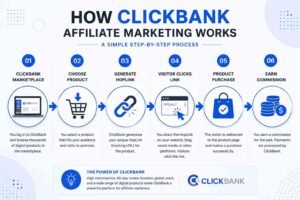
You create a free ClickBank account. You browse the marketplace and find a product you want to promote. ClickBank generates a unique affiliate “HopLink” for you, a tracking URL. When someone clicks your HopLink and purchases the product, ClickBank tracks the sale to your account and credits the commission.
Payments are made by cheque, direct bank transfer (for US bank accounts), or wire transfer,r depending on your country and preferences. For Pakistani affiliates, wire transfer through a platform like Payoneer is the most functional route.
ClickBank’s tracking cookie lasts 60 days by default, meaning if someone clicks your link today and purchases within 60 days, you earn the commission. This is significantly more generous than Amazon’s 24-hour cookie.
Understanding ClickBank’s Marketplace Metrics
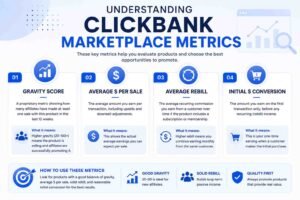
Before picking products, you need to understand the numbers ClickBank displays in the marketplace, because these tell you much more than the headline commission rate.
Gravity score: A proprietary metric showing how many affiliates have made at least one sale with this product in the last 12 weeks. A higher gravity (roughly 20–100+) means the product is selling,g and other affiliates are successfully promoting it. Very low gravity (under 5) may mean the product is new or simply doesn’t convert. Extremely high gravity (200+) means heavy competition from many affiliates.
Average $/sale: What you actually earn per transaction after any upsell/downsell adjustments. This is more useful than the commission percentage alone.
Average rebill: If the product has a subscription component, this shows average recurring earnings per referred customer over time. Products with high rebill income mean a single referred customer keeps paying you monthly.
Initial $/conversion: What you earn on the first transaction specifically, before any rebill income.
A product with reasonable gravity (20–80), an honest sales page, and a meaningful average $/sale is a better starting point than a product with extraordinary commission promises and an overwrought sales page full of unverifiable claims.
Step-by-Step: How to Start With ClickBank as a Beginner
Step 1 — Create a Free ClickBank Account
Go to clickbank.com and sign up as an affiliate; it’s free. You’ll provide your personal details and payment information. Once your account is active, you have access to the full marketplace.
ClickBank does not require you to have a website, specific follower counts, or prior sales to access the marketplace. This open access is one of the reasons it’s popular with beginners,s but it’s also why product quality varies so widely.
Step 2 — Browse the Marketplace With Critical Eyes
Categories- E-Business & E-Marketing, Health & Fitness, Self-Help, Software & Services, Education, and others organise the marketplace.
Before you get excited about any commission rate, open the actual product’s sales page and evaluate it like a consumer, not an affiliate.
Ask yourself honestly:
- Does the sales page make specific, verifiable claims or broad, vague promises?
- Is there a clear explanation of what the product actually contains?
- Is the price reasonable for what’s being offered?
- Would I be comfortable recommending this to a friend or family member?
- Does the vendor provide refund data or customer satisfaction information?
If a product’s sales page uses countdown timers claiming “offer expires in 10 minutes” that reset every time you refresh, makes dramatic income or health claims without evidence, or is structured more like a manipulation exercise than a genuine offer, skip it regardless of the commission rate.
The products that build long-term affiliate income are the ones where buyers get genuine value, complete their purchases without buyer’s remorse, and don’t request refunds. ClickBank’s refund rate data per product is visible in your dashboard. Look for products with low refund rates, not just high commissions.
Step 3 — Evaluate Products for Genuine Quality
Beyond the numbers, do additional due diligence before committing to promoting any ClickBank product.
Search for honest reviews of the product outside ClickBank on Reddit, in relevant Facebook groups, and on YouTube. If the only reviews you can find are clearly written by affiliates pushing their HopLink, that’s a warning sign. Legitimate products attract genuine customer reviews from people who bought and used them.
Buy the product yourself if you’re genuinely interested, and the price is accessible. The most credible affiliate reviews come from people who actually used the product, which means your content will be more authentic and your conversion rates will be higher.
Check the vendor’s website, social media presence, and customer support availability. A legitimate product will have an identifiable company or creator behind it, real contact information, and transparent terms.
Step 4 — Choose Your Promotion Platform
ClickBank affiliates promote products through several channels. Your choice should match what you’ve already built or are building:
A blog with SEO content: Write genuine, detailed reviews of the product. How-to articles that naturally recommend the product as a tool or solution. Comparison articles that include the product alongside alternatives. This is the highest long-term value channel. Articles continue driving traffic and commissions for years after publication.
YouTube: Product reviews and tutorials. If you’ve used the product yourself, a genuine video review is one of the most trusted forms of content for purchase decisions. Include your HopLink in the video description with clear disclosure.
Email newsletters: Once you have a list of subscribers in a relevant niche, an honest recommendation with context about why you chose this particular product converts well. Always disclose that it’s an affiliate recommendation.
Pinterest: For certain ClickBank categories, such as productivity tools, design resources, and self-improvement, Pinterest pins driving traffic to your review article can build consistent passive traffic over time.
Social media: Facebook Groups, Instagram, and TikTok can all work but require clearer disclosure practices and often have stricter link policies. Check each platform’s current affiliate link rules before using them.
What doesn’t work well: blasting affiliate links without a content context. A bare HopLink pasted into social media comments or forums, without any surrounding educational content, has both very low conversion rates and gets you flagged as spam.
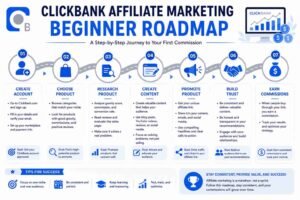
Step 5 — Create Content That Builds Trust Before Asking for the Sale
This principle applies to all affiliate marketing but is especially critical for ClickBank, where readers are often more sceptical because the product category has historically attracted over-promotion.
Your content should answer the questions a genuine buyer would have:
- What exactly is in this product?
- Who is it best suited for?
- What are the limitations or drawbacks?
- What results can someone realistically expect?
- How does it compare to alternatives?
Including genuine drawbacks and honest limitations in a review does not reduce conversions. Research consistently shows that buyers trust balanced reviews far more than uniformly positive ones, and trust is what drives purchase decisions with higher-ticket digital products.
Step 6 — Disclose Your Affiliate Relationship on Every Piece of Content
This is non-negotiable legally and ethically. The FTC, ClickBank’s own terms, and AdSense policy all require clear disclosure of affiliate relationships. Add a short statement near the top of every review, article, or post containing ClickBank affiliate links:
“This post contains affiliate links. If you purchase through my link, I may earn a commission at no extra cost to you. I only recommend products I’ve researched thoroughly and believe provide genuine value.”
Disclosure done this way doesn’t hurt conversion. Readers who buy from trusted affiliates after seeing a disclosure are rarely bothered by it. What damages trust is undisclosed affiliate content discovered later.
Real Examples: What Works in ClickBank Affiliate Marketing
The software reviewer: An affiliate in the productivity niche promotes a ClickBank-listed project management tool. She writes a detailed 1,800-word review comparing it with three alternatives, includes her genuine assessment of the interface, and is honest about the learning curve. The product has a gravity score of 45, a 60-day refund guarantee, and a 12% refund rate. Her review ranks on Google for the product name. Monthly commissions from this single article after eight months: approximately $80–$120.
The online education affiliate: An affiliate focused on digital skills promotes a ClickBank course teaching freelance writing, one he purchased, took, and genuinely found useful. He creates a YouTube video showing his own experience going through the course, including what he liked and what he thought could be improved. The honest, experience-based format drives high-trust conversions. Monthly commissions from the YouTube video: $60–$100 after four months.
Neither of these examples involves promoting questionable health supplements or get-rich-quick schemes. Both involve genuine, verified products in categories the creator actually understands.
Common Mistakes Beginners Make With ClickBank
Choosing products based entirely on commission rate. A 75% commission on a product nobody wants, with a 35% refund rate, earns you less than a 40% commission on a product with genuine demand and a 5% refund rate. Commission rate is the last thing to evaluate, not the first.
Promoting products without reviewing them. Writing a “review” of a product you haven’t researched thoroughly, just echoing the sales page with your HopLink,k produces content with no original value. Readers recognise this immediately, and so does Google.
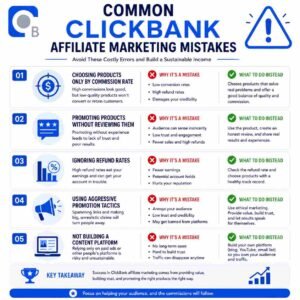
Ignoring refund rates. ClickBank commissions can be reversed if a buyer requests a refund within the standard guarantee window. A product with a very high refund rate erodes your earned commissions over time and signals poor product quality.
Using aggressive, pressure-based promotion tactics. Fake scarcity, manufactured urgency, and exaggerated claims for ClickBank products are both ethically problematic and increasingly penalised by search engines and social platforms. These tactics may have worked years ago. They don’t build sustainable income in 2026.
Not building your own content platform. Affiliates who promote products entirely through rented platforms, MS other people’s forums, borrowed social media audiences, and paid ads build no lasting assets. A blog or YouTube channel that consistently earns commissions is yours, regardless of algorithm changes on any single external platform.
Tips That Actually Help
Focus on categories where you have genuine knowledge. ClickBank’s E-Business and Education categories tend to have better quality control than the most heavily marketed health products. If you understand online business, digital tools, or professional skills, you’ll find credible products to promote in those categories more easily.
Look for products with strong vendor support for affiliates. Good ClickBank vendors provide affiliates with promotional materials, email swipe copy, product details, and sometimes direct contact for questions. This signals a professional operation that takes product quality seriously.
Combine ClickBank with other affiliate programmes. ClickBank doesn’t need to be your only income source. Many successful affiliates use ClickBank for higher-commission digital product promotions alongside Amazon Associates for physical product recommendations, getting the benefit of both structures.
Track your HopLink performance. ClickBank’s reporting dashboard shows clicks, sales, and refunds per product. After 60–90 days, you’ll see clearly which products are converting and which are generating clicks but no sales. Refocus your promotion effort on what’s working.
FAQs
Is ClickBank free to join? Yes. Creating an affiliate account is completely free. There’s no fee to browse the marketplace or generate HopLinks.
Can Pakistani affiliates use ClickBank? Yes. ClickBank is available to affiliates in Pakistan. Wire transfer via Payoneer is the most functional payout method for Pakistani affiliates. Set this up in your account settings.
How much can a beginner realistically earn from ClickBank? Honestly, the range is wide. In the first few months, most beginners earn very little while building content and traffic. After six months to a year of consistent effort in a focused niche, monthly earnings of $50–$300 are realistic for someone managing a blog or YouTube channel alongside other commitments. More is possible with greater scale, but not guaranteed and not quick.
Do I need a website to promote ClickBank products? Technically, no; YouTube channels and some social platforms are accepted. But a blog significantly increases your earning potential through SEO traffic and provides a platform where you have full control over your affiliate links and content.
What are the best ClickBank product categories for beginners? E-Business & E-Marketing (online business tools and courses) and Education/Self-Help tend to have more legitimate products with verifiable value propositions than heavily marketed health or wealth categories. Start there.
The Bottom Line on ClickBank
ClickBank is not the problem. The choices made within it are.
Someone who approaches ClickBank as a commission-maximisation exercise, picking whatever pays most and promoting it to anyone who’ll listen, will either burn their audience’s trust quickly or end up promoting things they’d be embarrassed to defend.
Someone who approaches ClickBank as a product-selection problem, spending real time finding legitimate products in their niche, researching them thoroughly, and promoting them honestly can build a real, durable affiliate income without any of those downsides.
The platform is just infrastructure. The judgment about what to put through it is entirely yours. And it’s the most important decision you’ll make as a ClickBank affiliate.
Disclaimer: This article is for educational and informational purposes only. Affiliate marketing results vary significantly based on niche, content quality, effort, and market conditions. Nothing here constitutes a guarantee of income or financial advice